
until Sunday May 13 2012
Walther Collection
Reichenauerstrasse 21
89233 Neu-Ulm
Germany
Press Contact
Markus Mueller
T : +49-30-20188432
press@walthercollection.com
info@walthercollection.com
www.walthercollection.com
Contemporary landscape photography of Southern Africa is focus of the second exhibition at the Walther Collection in Germany .
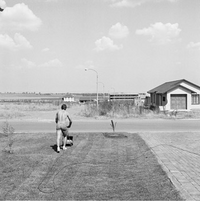
Curated by Corinne Diserens, Appropriated Landscapes explores landscape typologies, mainly of Southern Africa, presenting works by fourteen artists: Jane Alexander, Ângela Ferreira, Peter Friedl, David Goldblatt, Christine Meisner, Sabelo Mlangeni, Santu Mofokeng, Zanele Muholi, Jo Ractliffe, Penny Siopis, Mikhael Subotzky/Patrick Waterhouse, Guy Tillim, and—with his North American landscapes—Mitch Epstein.
The concept of landscape in Appropriated Landscapes is not exclusively linked to the historical perception of the picturesque and the sublime but considers landscape as a prism of experience, a reflection of ideology, and an embodiment of memory. It looks at built structures and monuments. To borrow the words of Santu Mofokeng, this use of the word "landscape" stretches it to "its fullest in order to invoke literal, colloquial, psychological, philosophical, mystical, metaphysical and metonymic meanings and applications." Appropriated Landscapes invokes landscapes in South Africa, Namibia, Angola, and Mozambique, containing traces of the region's history and its geopolitical configuration, through wars, migration, colonialism, and industrialization. Many of the artists presented here have created images through topographical studies, explorations of nomadic peripheries and in-between spaces, or chronicles of social geography altered by divisive spatial planning and modern architecture. The exhibition captures multiple possibilities of constructing and reading different landscapes, in both their contexts of production and their reception. As a result of shared systems of beliefs and ideologies, these landscapes are a construct of the mind—"built up as much from the strata of memory as from layers of rock." The narrative of the exhibition also investigates architecture and spatial planning not only as the image of the social order, but also as that which preserves or even imposes the social order.