|
MODEM Dialogues - In conversation
with Cecilie Thorsmark
|
|
|
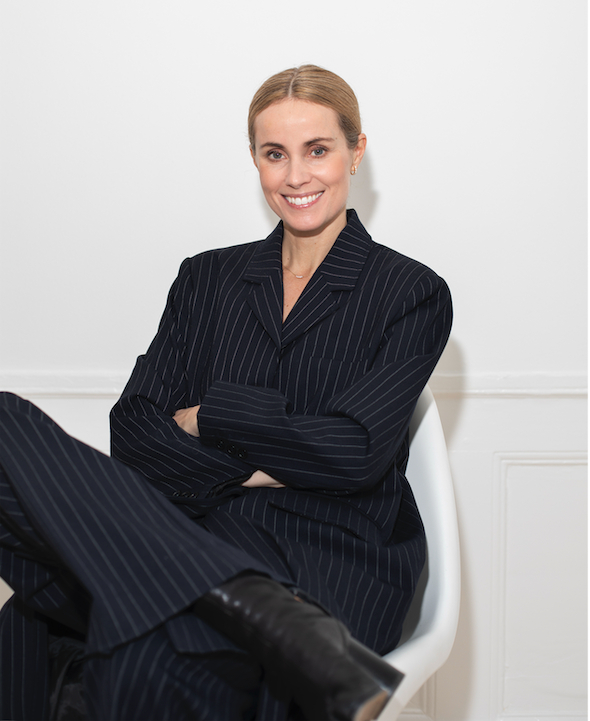
Cecilie Thorsmark. CEO Copenhagen Fashion Week
Portrait Cecilie Thorsmark ® Tine Bek.
Questions conceived and hosted by Florian Müller
Modem: Raised in the creative ecosystem of Denmark, you’ve often acted as a translator between values and systems. When you step back from strategy, how do you personally define beauty in purpose?
Cecilie Thorsmark: Growing up in Denmark’s strong design culture, I have learned that beauty is never only aesthetic, it’s also about intention and responsibility. For me, in my current role, I find beauty in purpose in using a platform in a way that contributes something meaningful. So, at Copenhagen Fashion Week, my ambition has been to help redefine what a fashion week can stand for. Through the ''Sustainability Requirements'' and through stronger collaboration with other industry organisations such as the British Fashion Council, Fashion Council Germany, Amsterdam Fashion Week and Oslo Runway, we have tried to show that a platform can also act as a catalyst for positive change. Seeing these kinds of alliances emerge across borders has been one of the most encouraging aspects of the journey so far.
Modem: In your transition from communication to leadership, what revealed itself to you about the power - or the fragility - of influence within fashion?
Cecilie Thorsmark: Moving from communication into leadership has for sure made me realise how delicate influence in fashion actually is. Because while a single brand can initiate actions or a single institution can initiate conversations, meaningful change only happens when many actors move in the same direction.
What has become very clear to me during my tenure leading Copenhagen Fashion Week is that influence is very much about building trust and being in the process together. When people understand the intention behind a decision and feel part of the process, they are far more willing to engage with change. That has shaped how we work at Copenhagen Fashion Week, particularly when introducing initiatives such as the ''Sustainability Requirements'', which depend on collaboration across the industry rather than top-down enforcement.
Modem: Many define your tenure by the clear sustainability framework you set. To you, which qualities distinguish genuine transformation from institutional adaptation?
Cecilie Thorsmark: In reality, transformation in an industry as complex as fashion rarely happens overnight. It often begins with institutional shifts that gradually change expectations and behaviour. Introducing the ''Sustainability Requirements'' was very much about embedding new standards into the structure of a fashion week. What distinguishes change, however, is when those structures begin to influence how brands operate beyond the runway. When designers start reconsidering sourcing, production or waste streams because participation requires it, then the framework becomes more than a policy. It becomes a catalyst for broader transformation.
Modem: The external advisory committee for Copenhagen Fashion Week’s shows and presentations brings together respected international voices. Reflect on the ways this round table of perspectives expands your sense of what “Copenhagen” can stand for globally.
Cecilie Thorsmark: The Show and Presentation Committee operates as a rotating system where every two seasons we invite representatives from across the international fashion landscape to advise on the upcoming schedule. They review each applicant and vote on the brands they believe should participate. We aim to maintain a balance between Nordic and international perspectives, which reflects the global community surrounding Copenhagen Fashion Week today. Once the committee has made its recommendations, our external advisor Ramboll reviews the selected brands to ensure they meet the Minimum Standards within our ''Sustainability Requirements'' framework. In this way we balance relevance and responsibility, ensuring the schedule reflects both strong design and a commitment to positive impact.
Modem: Partnerships are often praised for alignment, yet difference can be just as productive. Where have moments of constructive tension most advanced your vision for the week?
Cecilie Thorsmark: In our experience we’ve only experienced constructive dialogues around our ''Sustainability Requirements'' that have informed the development of the framework - and the differences primarily have to do with the fact that we operate in different countries, each with our own industry structures and also different forms of legislation. But I only see those small differences as very valuable. They force us to look at the criteria of the ''Sustainability Requirements'' from multiple angles and to be realistic about how they can be implemented across varied contexts.
Modem: Beyond environmental progress, cultural impact has become a central theme in your work. When do you sense change starting to embed itself in people’s thinking rather than their messaging?
Cecilie Thorsmark: One of the clearest signals is when designers start exploring new materials, production methods or circular approaches as a source of creative opportunity rather than a requirement to live up to, that, I believe, suggests the thinking is beginning to shift. Within our community we see this particularly among younger designers such as Bonnetje, as well as newer voices like Taus and SSON, who demonstrate how for example working with existing and deadstock materials can open up entirely new design processes rather than limiting creativity.
Modem: Among the many layers of your role - leader, mediator, advocate - who within you demands the greatest self‑listening?
Cecilie Thorsmark: That’s a difficult question, but probably the role of mediator. Copenhagen Fashion Week sits at the intersection of many interests: designers, industry organisations, partners, media, legislation and the public. Each of their perspectives, interests and opinions are valid, but they do - naturally - not always align. In those moments, it’s important to listen carefully, both to others and to one’s own principles. So, it’s definitely a maneuvre of navigating complexity which at times can require a certain degree of self-reflection to ensure decisions remain consistent with the broader values guiding the platform.
Modem: Creative teams, brands, and organizers constantly balance ambition with vulnerability. Why might professional care become as integral to production as deadlines or deliverables?
Cecilie Thorsmark: Denmark has long been known for valuing balance between work and life, and that mindset has always influenced how I think about leadership. As the fashion industry becomes more complex and unpredictable, maintaining a sense of care in workplaces becomes increasingly important. If we want creativity to flourish, people need the conditions that allow them to sustain their work over time. Prioritising well-being is therefore not separate from productivity, but a prerequisite for a healthy and resilient workplace.
Modem: Pressure and pace are often justified as part of the industry’s DNA. Could reimagining its rhythm be the real form of innovation - not what we make, but how we move?
Cecilie Thorsmark: Indeed, the fast fashion cycles are not only harmful for the environment and creating immense pressure on the people in the fashion value chain, which I would hope we can move away from. And I definitely agree, reconsidering that rhythm could indeed be one of the most meaningful forms of innovation.
Modem: Many now treat sustainability as yesterday’s revolution and search for the next frontier. If fashion keeps rewriting its conscience, what truth would you want quietly to endure beneath the changing vocabulary of progress?
Cecilie Thorsmark: The vocabulary around sustainability has evolved and will inevitably continue to evolve. What I hope endures beneath those shifts is a simple principle: that the choices we make today should contribute to a more responsible and thoughtful industry tomorrow. Fashion has enormous cultural influence, and with that comes a responsibility to consider both environmental and social impact. Even small steps can contribute to meaningful progress when they are taken consistently and collectively.
Portrait Cecilie Thorsmark ® Tine Bek.
|
|
|
